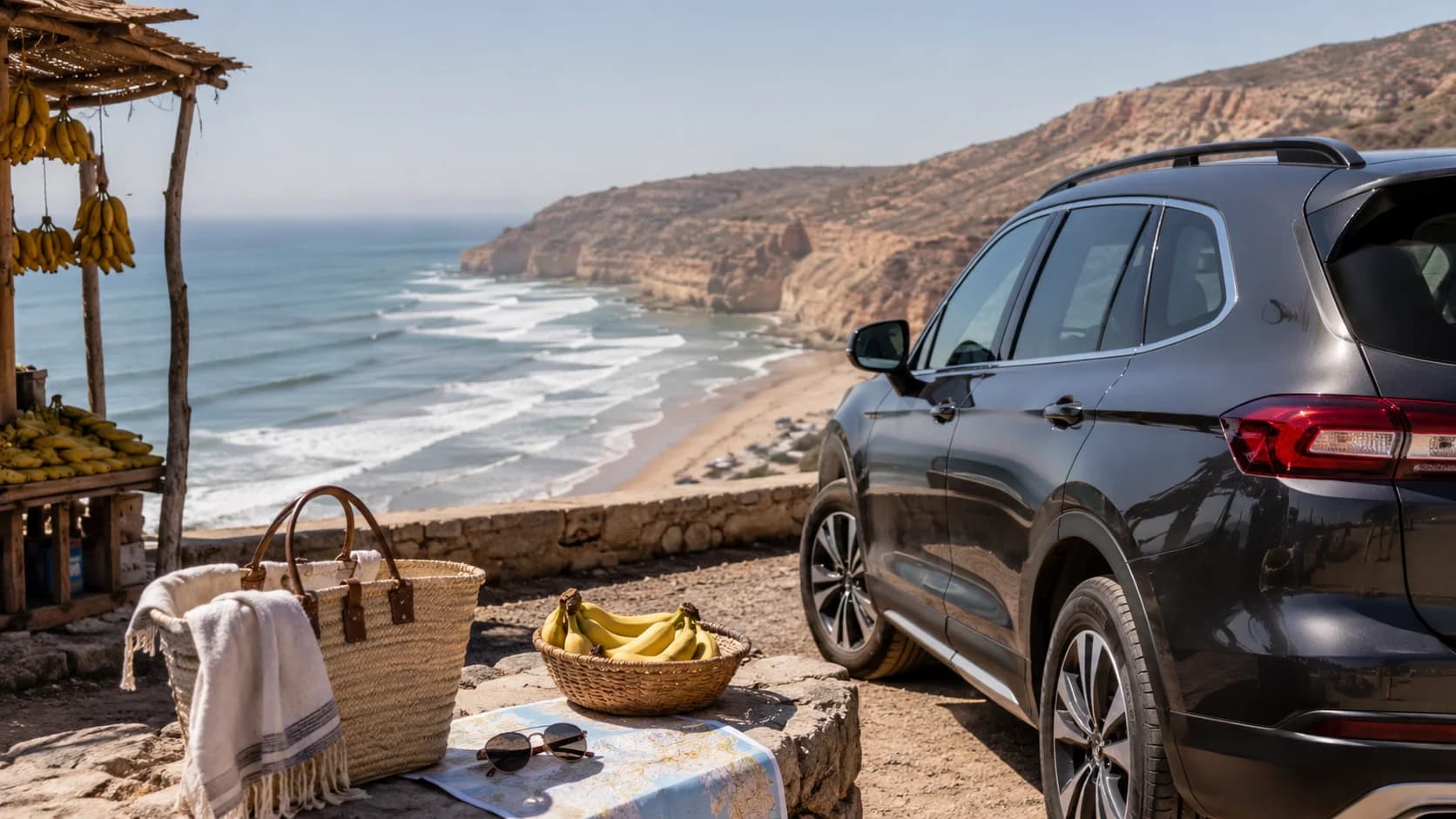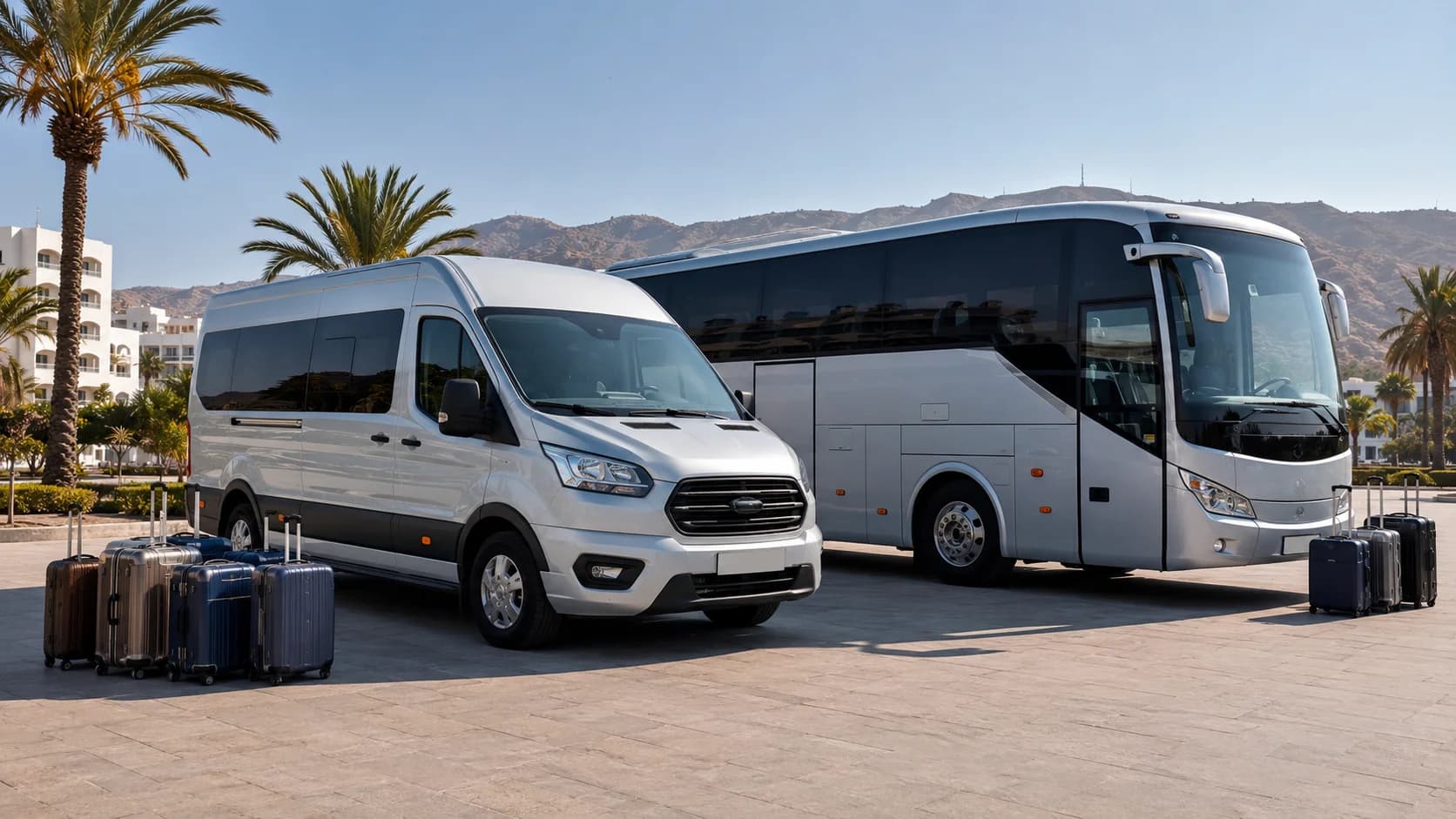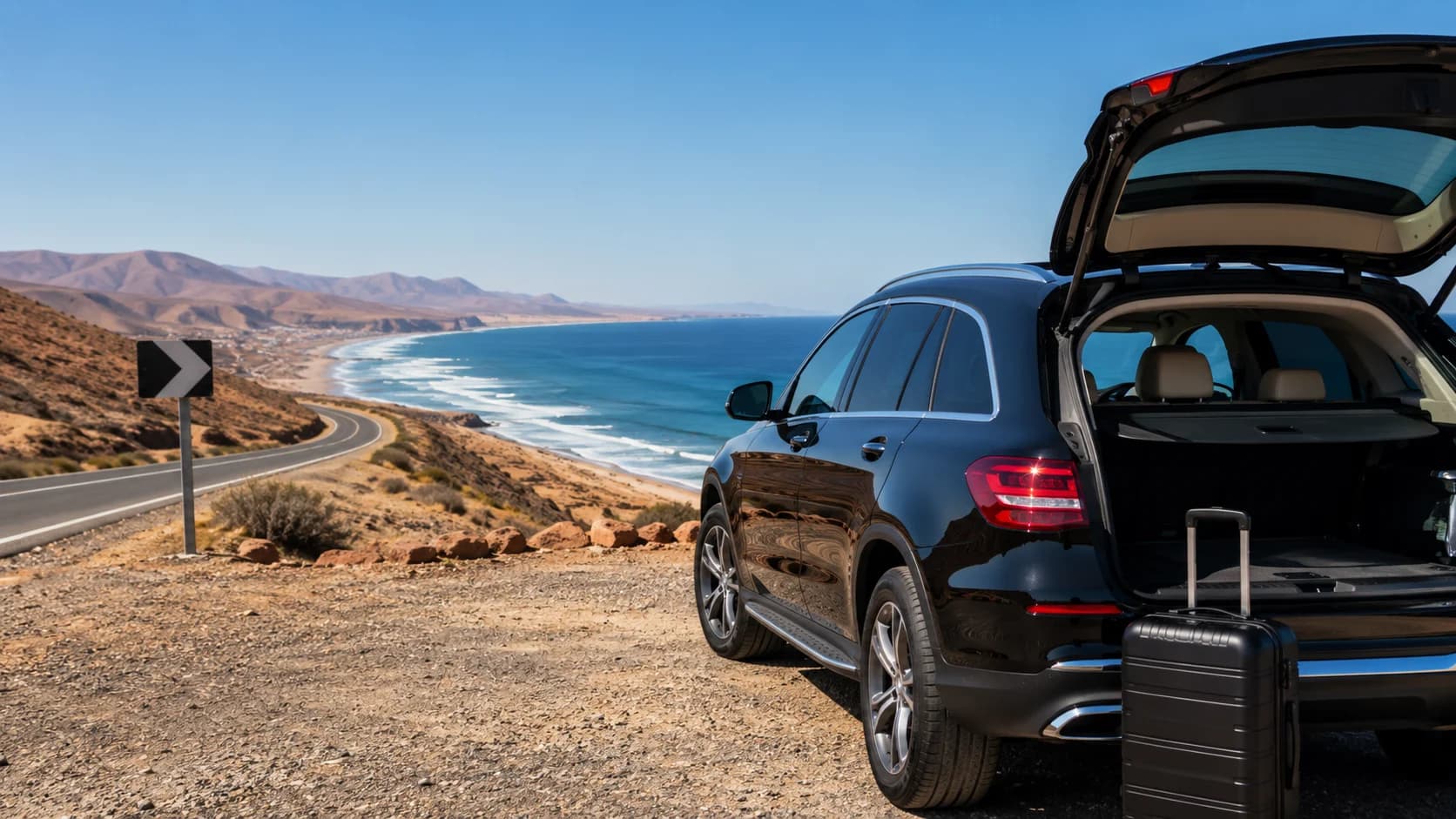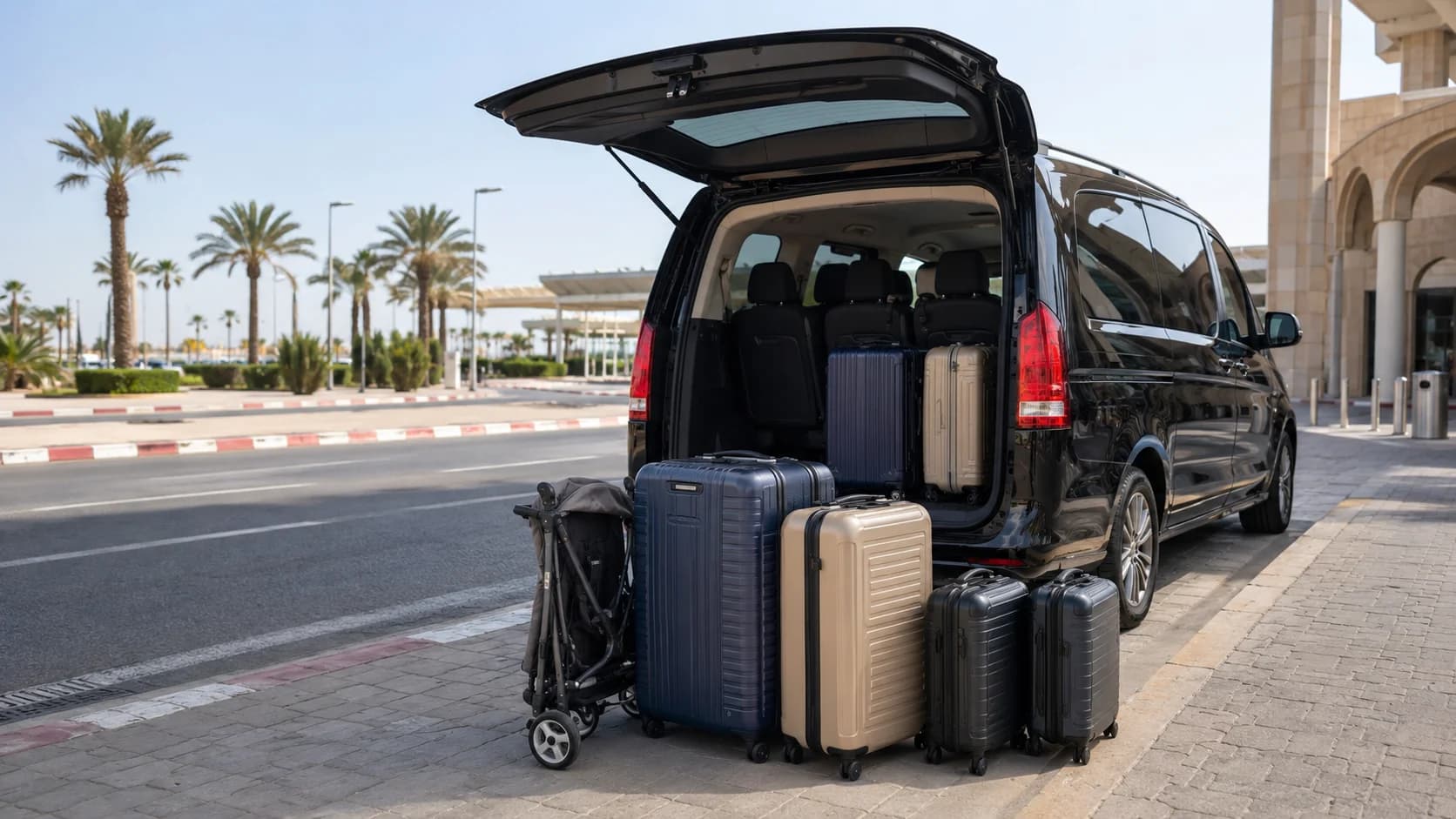









Travelers planning mountain, rural, or long-distance journeys from Agadir often assume that a 4x4 is automatically necessary once the route leaves the city.
In reality, that is rarely the best way to choose a vehicle.
The difference between 4x4 vs SUV Agadir transfers usually comes down to the actual road surface, the final access to your accommodation, the number of passengers, luggage volume, and seasonal conditions.
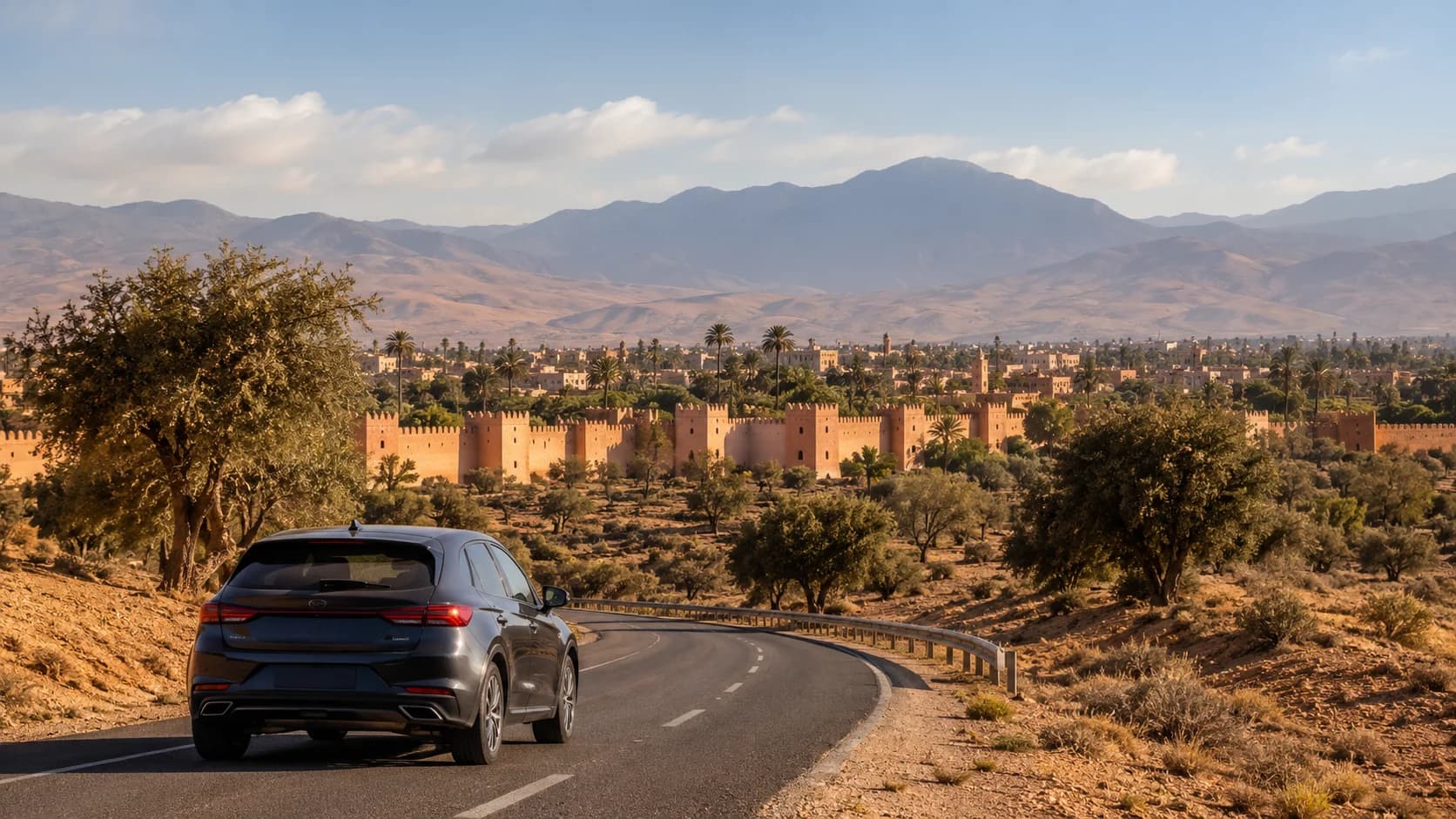
A mountain destination does not automatically require four-wheel drive. Many journeys from Agadir use normal paved roads where an SUV, and sometimes even a comfortable sedan, may be completely suitable.
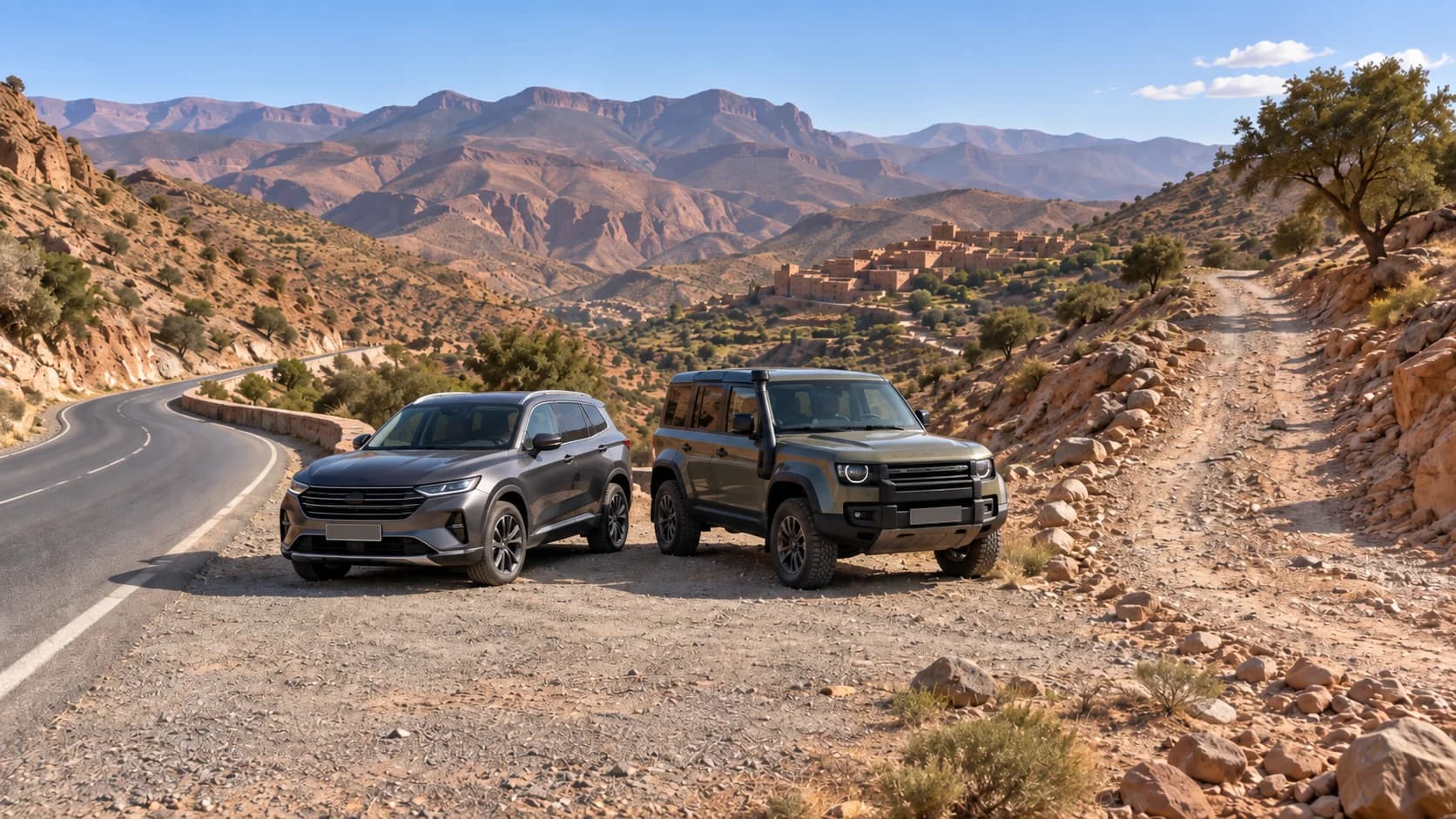
A true 4x4 becomes more relevant when the route includes rough unpaved tracks, steep rural approaches, loose surfaces, or difficult final access to remote accommodation.
This guide explains how to choose based on the road you will actually travel rather than simply choosing the biggest or most rugged-looking vehicle.
Table of Contents
- SUV or 4x4?
- What an SUV means for a private transfer
- What makes a true 4x4 different
- Paved mountain routes around Agadir
- Rural access and rough final approaches
- Passengers, luggage and ride comfort
- Weather and seasonal road conditions
- When a 4x4 is unnecessary
- What destination details to send before booking
- SUV or 4x4 decision checklist
- Frequently asked questions
SUV or 4x4?
For most transfers from Agadir that remain on paved roads, an SUV is generally the first vehicle type worth considering.
You may want to ask about a 4x4 when the journey includes:
-
long unpaved sections
-
rocky or deeply uneven tracks
-
steep dirt roads
-
remote mountain accommodation
-
poor-quality rural access roads
-
difficult conditions after heavy rain
-
areas where the accommodation specifically recommends 4x4 access
The key distinction is simple:
Mountains do not automatically mean off-road conditions.
A winding paved mountain road and a rough mountain track are two completely different situations.
If your route from Agadir follows conventional paved roads all the way to the destination, four-wheel drive may provide no meaningful advantage for the transfer.
If the last few kilometers involve a rough track to a guesthouse, lodge, village, or trail access point, the recommended vehicle may change.
What an SUV Means for a Private Transfer
An SUV is generally chosen for comfort, cabin space, seating position, luggage capacity, and increased ground clearance.
It is important to understand that an SUV is not automatically a four-wheel-drive vehicle.
Some SUVs are two-wheel drive. Others may use all-wheel drive or four-wheel-drive systems depending on the model.
For a private transfer, passengers often choose an SUV transfer in Agadir because it can provide a more comfortable experience on longer journeys.
Typical advantages may include:
-
a higher seating position
-
easier entry and exit
-
more cabin space
-
additional luggage room
-
better clearance on imperfect roads
-
increased comfort for longer transfers
These features can be useful on mountain and intercity journeys even when four-wheel drive is not required.
For example, a family traveling several hours from Agadir may benefit more from a spacious SUV with a large luggage area than from a compact off-road vehicle with less usable boot space.
What Makes a True 4x4 Different?
A true 4x4 is designed to provide drive to all four wheels and is generally intended to offer additional traction in more difficult conditions.
Depending on the vehicle, it may also include features such as:
-
higher ground clearance
-
stronger suspension
-
dedicated driving modes
-
improved traction on loose surfaces
-
low-range gearing on some models
-
underbody protection
These capabilities can become valuable when a transfer leaves normal paved roads.
For example, a 4x4 with driver in Agadir may be more appropriate when the last part of the journey involves an uneven mountain track or a remote property reached by an unmaintained rural road.
However, a 4x4 should not be presented as an automatic safety upgrade.
Four-wheel drive can improve traction in certain conditions, but it does not compensate for excessive speed, poor tires, severe weather, closed roads, or unsafe driving.
Vehicle choice should always be based on the actual route and current conditions.
Paved Mountain Routes Around Agadir
One of the most common mistakes travelers make is assuming that every trip toward the mountains requires a 4x4.
That is not the case.
Many journeys from Agadir toward inland towns and mountain areas use paved roads.
These routes may include:
-
steep sections
-
sharp bends
-
elevation changes
-
narrow stretches
-
slower mountain driving
But none of those conditions automatically require four-wheel drive.
A paved road remains a paved road.
For normal transfers on established routes, the bigger priorities may be passenger comfort, luggage space, air conditioning, and having an experienced driver who understands the route.
Tafraoute
Tafraoute is a good example.
The journey takes travelers deep into the Anti-Atlas landscape, but that does not mean every transfer requires a 4x4.
If your hotel or accommodation is reached directly by normal paved road, an SUV may be entirely appropriate.
The important question is whether your final destination is actually in central Tafraoute or farther into a rural area.
A guesthouse outside town with several kilometers of rough access may require a different vehicle than a hotel beside the main road.
Paradise Valley
The same principle applies to Paradise Valley.
Travelers sometimes assume that because the destination is mountainous and scenic, a 4x4 must be necessary.
What matters is the exact pickup and drop-off point.
If the planned transfer uses normal road access, an SUV or another suitable road vehicle may be sufficient.
If you are heading to a more remote property, viewpoint, or accommodation beyond the standard access route, confirm the final road conditions before booking.
Rural Access and Rough Final Approaches
The final section of the journey is often the most important factor in the 4x4 vs SUV Agadir decision.
A long transfer may include 95% normal road and only 5% difficult access.
That final 5% can determine the correct vehicle.
Imagine two travelers both booking an Anti-Atlas private driver.
One is staying at a hotel beside a paved road.
The other is staying at a small mountain guesthouse reached by several kilometers of loose gravel and steep uneven track.
Both are technically traveling to the same region, but they do not have the same transport requirements.
For a rural transfer from Agadir, tell the provider if your accommodation is:
-
outside the main town
-
reached by an unpaved road
-
located on a mountain track
-
accessible through a narrow village lane
-
at the end of a steep approach
-
difficult to reach during rain
If possible, send the accommodation name and exact map location.
You can also ask the accommodation owner:
Can normal passenger cars reach the property comfortably, or do you recommend a 4x4?
That single question can be more useful than choosing a vehicle based only on the destination name.
Passengers, Luggage and Ride Comfort
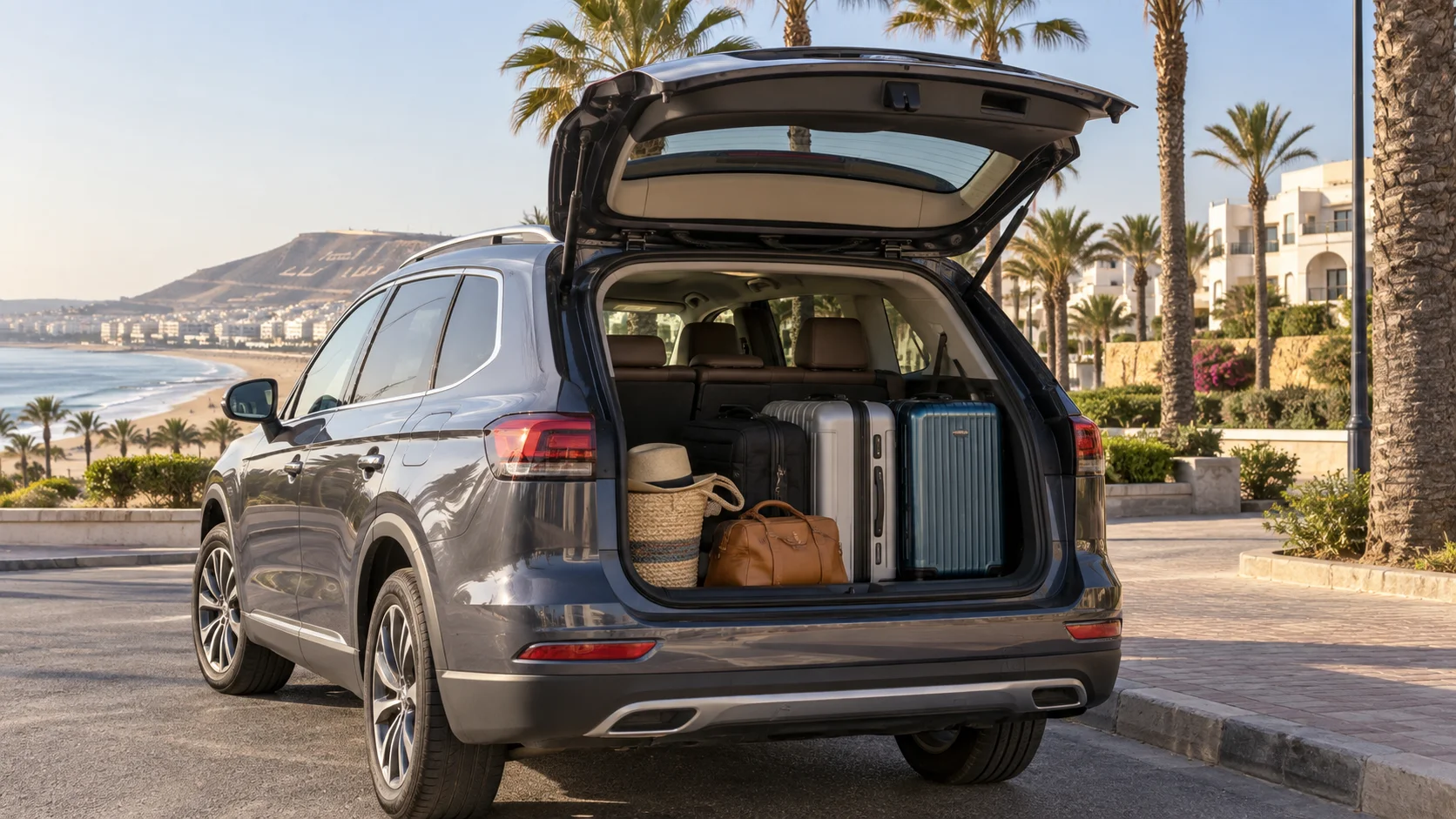
Road capability is only one part of choosing the right transfer vehicle.
You should also consider how many people are traveling and how much luggage they have.
Passenger space
A long-distance transfer can involve several hours in the vehicle.
For longer routes, consider:
-
legroom
-
seat comfort
-
air conditioning
-
cabin width
-
ease of entering and exiting
An SUV may sometimes provide more useful passenger comfort than a smaller off-road-oriented 4x4.
Luggage capacity
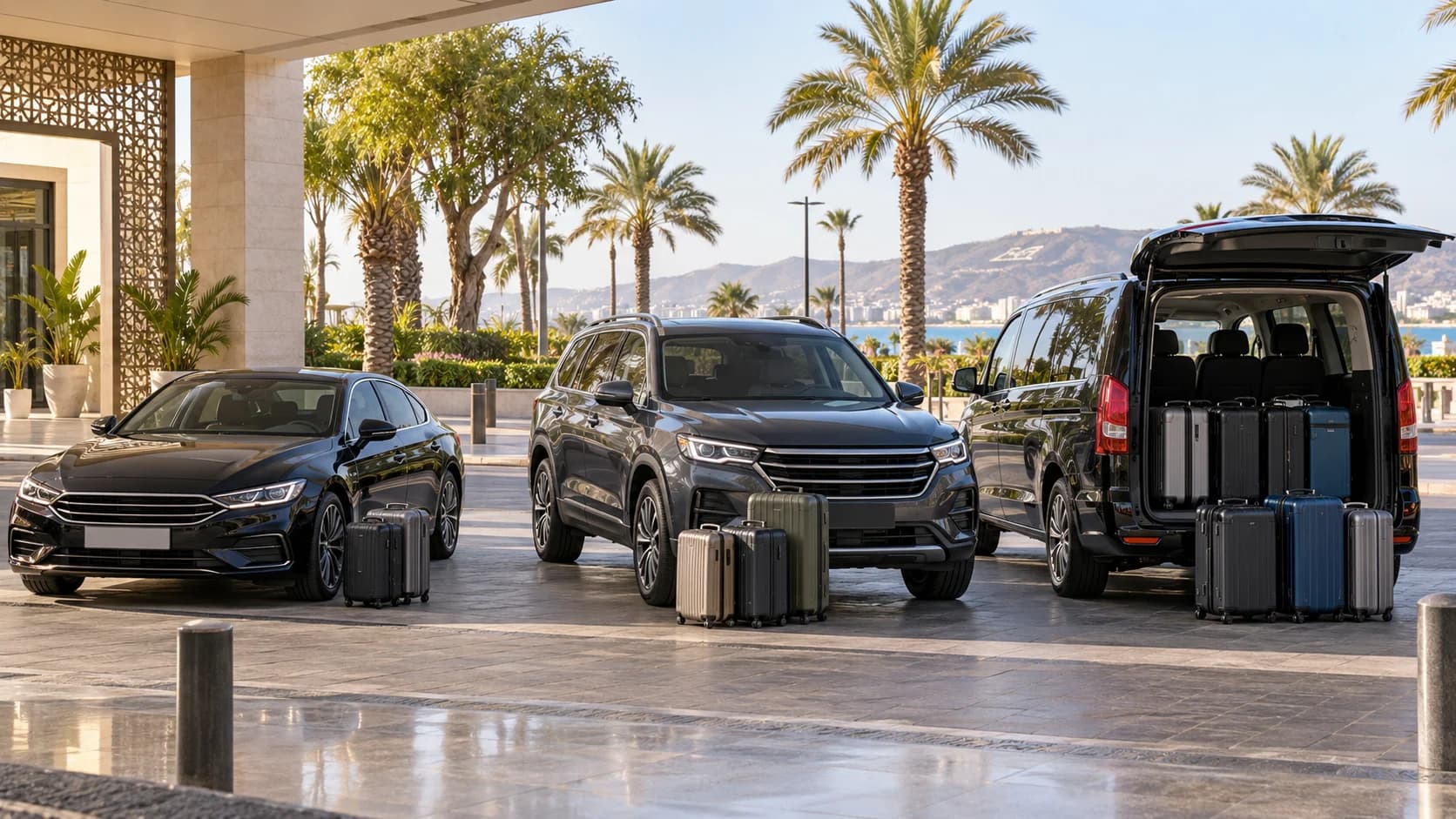
Do not assume that every 4x4 has a large boot.
Some rugged vehicles sacrifice luggage space for mechanical equipment, suspension design, or compact dimensions.
Tell the transfer provider if you have:
-
large suitcases
-
cabin bags
-
strollers
-
sports equipment
-
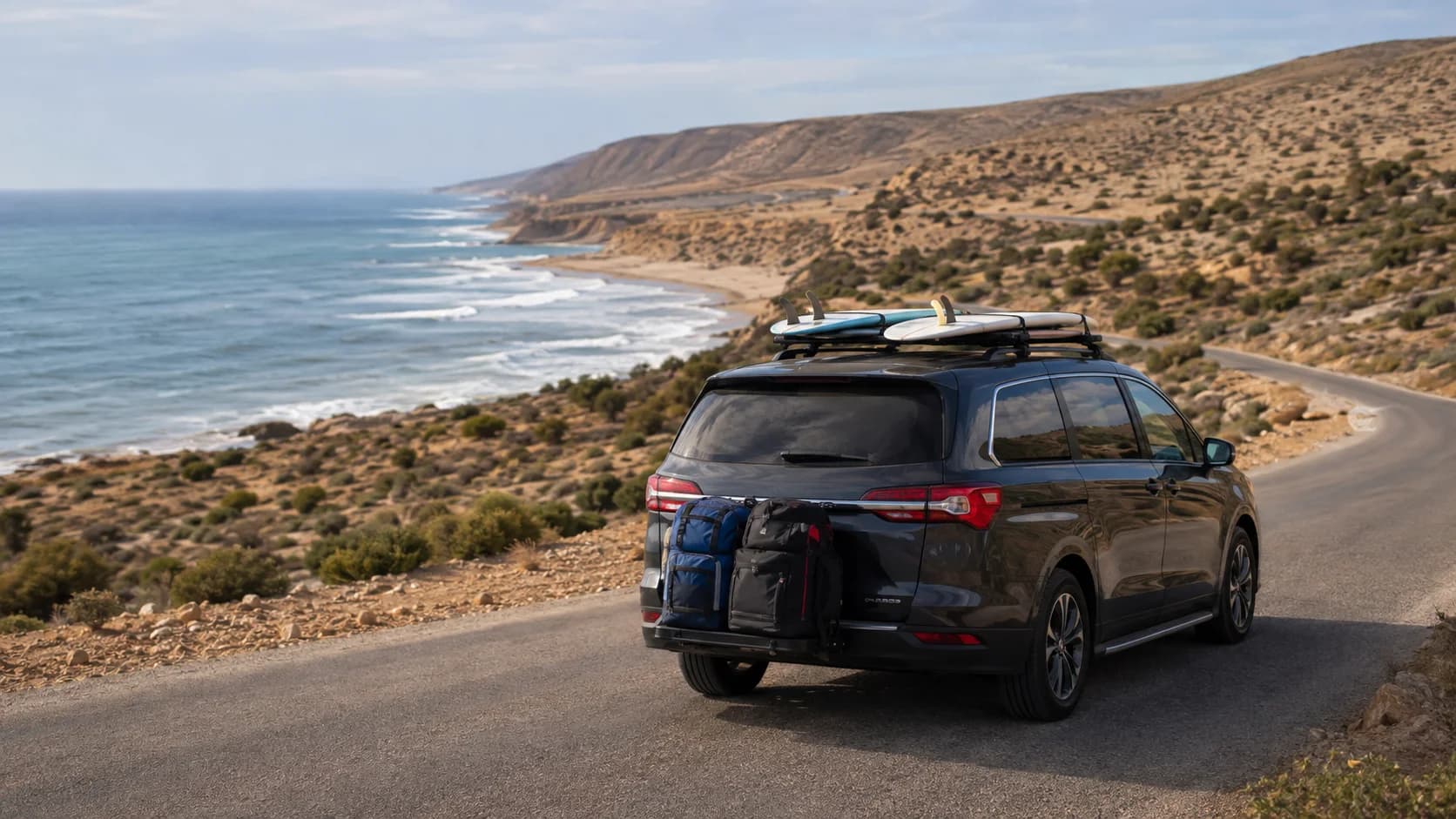
surfboards
-
several backpacks
A spacious SUV or minivan may be more practical than a 4x4 when the entire route is paved.
Larger groups
For families or groups, vehicle size can matter more than drivetrain type.
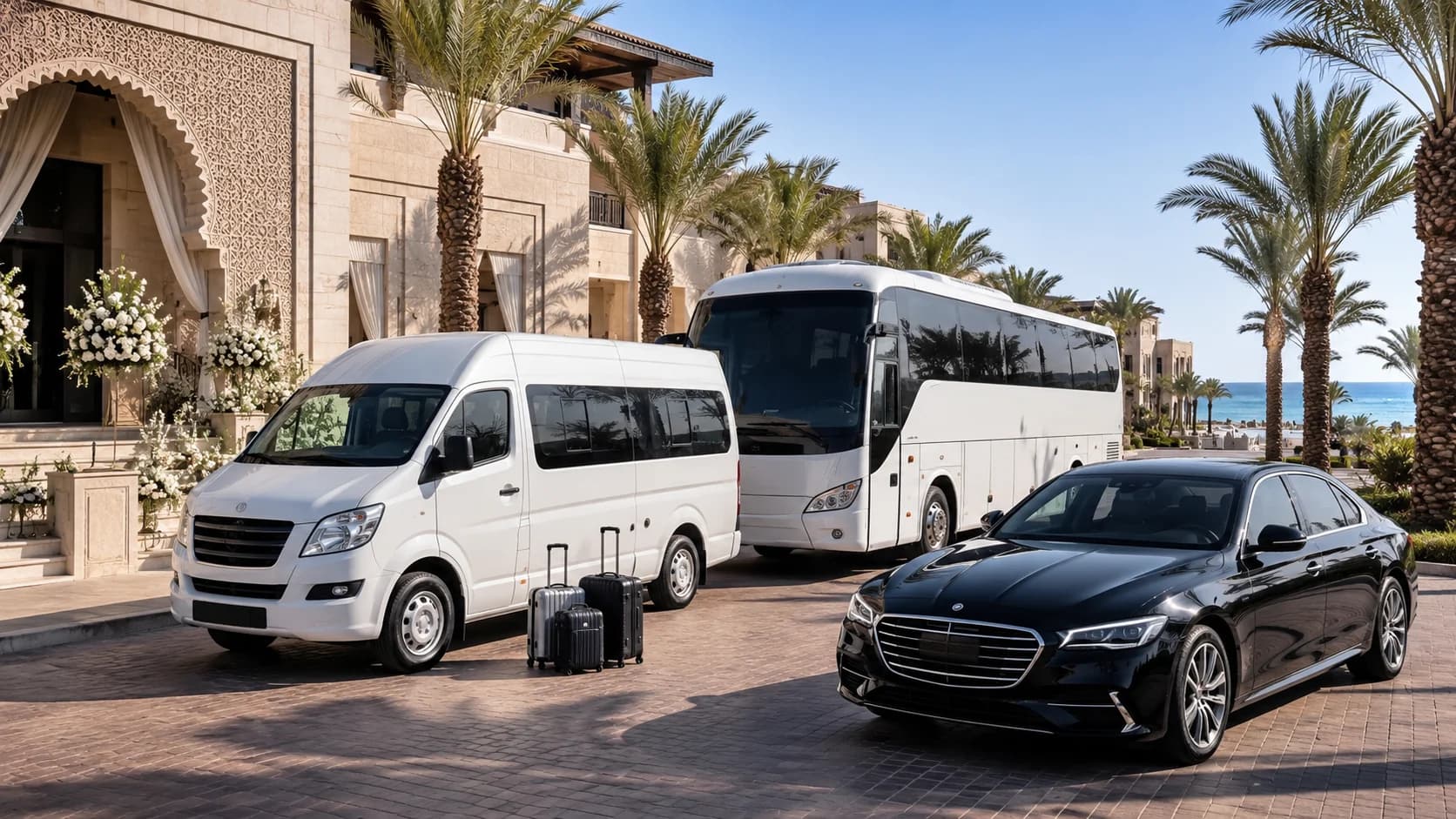
If you have five or more passengers with luggage, compare the available SUV with a larger passenger vehicle before automatically requesting a 4x4.
For normal intercity travel from Agadir, comfort and luggage capacity are often the main considerations.
Weather and Seasonal Road Conditions
Weather can change the recommendation.
A dry rural track may be manageable in one type of vehicle and considerably more difficult after heavy rain.
Possible issues include:
-
muddy sections
-
washed-out surfaces
-
loose gravel
-
temporary standing water
-
reduced visibility
-
rock debris on mountain roads
This is particularly important when the destination is remote.
If your journey includes an unpaved section, it is sensible to reconfirm the route before departure when significant weather has occurred.
The important principle is not that bad weather automatically requires a 4x4.
Instead, bad weather means the road should be reassessed.
Sometimes the solution may be a more suitable vehicle.
At other times, the safer decision may be to use another route or delay the journey.
When a 4x4 Is Unnecessary
A 4x4 can be unnecessary when the entire journey remains on conventional roads.
Examples may include:
Agadir to another major city
Standard intercity travel usually takes place on paved roads.
Vehicle choice is more likely to depend on comfort, group size, and luggage.
Agadir to Taroudant
A mountain-style vehicle is not automatically required simply because the journey heads inland.
Agadir to Tiznit
For a normal paved transfer, a sedan or SUV may be perfectly suitable.
Agadir to Tafraoute
The mountainous nature of the destination does not automatically mean 4x4 access.
The final accommodation location is the more important question.
Paradise Valley
A standard sightseeing transfer does not automatically require four-wheel drive.
Confirm the exact road and final stop instead.
Choosing a 4x4 when it is not required can also mean selecting a vehicle with less luggage room or different ride characteristics when a more comfortable road-focused vehicle would have suited the journey better.
What Destination Details to Send Before Booking
The best way to get the right vehicle is to give the transfer provider specific information.
Avoid sending only:
"We are going to the mountains."
Instead, send:
-
exact pickup point
-
exact destination
-
accommodation name
-
Google Maps location
-
number of passengers
-
number of suitcases
-
whether the final road is paved
-
approximate length of any dirt section
-
access information supplied by the accommodation
A useful booking request could be:
Agadir Airport to a guesthouse outside Tafraoute. Four passengers with three large suitcases. The property says the final 4 km is an unpaved road. Would you recommend an SUV or 4x4?
This gives the provider enough information to suggest an appropriate vehicle.
It also reduces the chance of discovering an access problem after the journey has already started.
SUV or 4x4 Decision Checklist
Use this checklist before confirming your transfer.
| Question | What it usually means |
|---|---|
| Is the complete route paved? | An SUV may be sufficient |
| Is the route mountainous but paved? | 4x4 is not automatically required |
| Is there a short, good-quality gravel section? | Confirm suitability with the provider |
| Is there a long rough track? | A 4x4 may be more appropriate |
| Is the final access steep or rocky? | Discuss a proper 4x4 |
| Are you carrying lots of luggage? | Compare boot capacity |
| Are you traveling with several passengers? | Consider a larger SUV or minivan |
| Is the accommodation remote? | Send the exact map location |
| Has there been heavy rain? | Reconfirm road conditions |
| Does the property recommend 4x4 access? | Tell the transfer provider |
The best rule is:
Choose the vehicle according to the most difficult section of the actual route, not the name of the destination.
Frequently Asked Questions
Do I need a 4x4 for the Anti-Atlas from Agadir?
Not necessarily.
Many Anti-Atlas journeys use normal paved roads. A 4x4 becomes more relevant if your exact route includes rough, steep, damaged, or unpaved access.
Is every SUV a four-wheel-drive vehicle?
No.
SUV refers mainly to the vehicle category and body style. Some SUVs are two-wheel drive, while others may have all-wheel-drive or four-wheel-drive systems.
Can an SUV handle paved mountain roads?
In general, yes.
A suitable SUV can be used on normal paved mountain roads. The road condition, driver experience, vehicle condition, and weather remain important.
Do I need a 4x4 for Tafraoute?
Not automatically.
If you are traveling to accommodation reached by normal paved road, an SUV may be sufficient.
If your hotel or guesthouse is reached through a rough rural track, ask whether a 4x4 is recommended.
Is a 4x4 necessary for Paradise Valley?
Not for every transfer.
Vehicle choice depends on the exact route and final access point rather than simply the destination.
Which vehicle is better with luggage?
The vehicle with the most suitable boot capacity.
A large SUV may sometimes offer more luggage space than a compact 4x4.
Always provide your passenger and luggage details before booking.
Is a sedan suitable for paved intercity routes?
Yes.
For many normal paved intercity routes from Agadir, a sedan can be suitable, especially for one to three passengers with moderate luggage.
An SUV may provide more room or easier entry for longer journeys.
What if my guesthouse is reached by an unpaved road?
Send the exact accommodation location to the provider and explain what you know about the access.
Ask whether ordinary cars regularly reach the property and whether a 4x4 is recommended.
Does weather change the vehicle recommendation?
It can.
Rain and other weather conditions can affect rural and unpaved roads, so remote-route access may need to be reconfirmed shortly before travel.
What road details should I send before booking?
Send the final destination, map pin, accommodation name, passenger count, luggage quantity, whether the road is paved, and any access instructions provided by the property.
Final Advice: Match the Vehicle to the Road
The right choice between an SUV and a 4x4 with driver in Agadir should come from the actual road conditions, not from assumptions about mountain travel.
If your journey stays on paved roads, an SUV can often provide the comfort, ground clearance, luggage space, and seating position travelers want for longer transfers.
If the route includes rough rural tracks, steep unpaved approaches, or difficult access to remote accommodation, a true 4x4 may be more appropriate.
The most important step is to share the full route before booking.
Send your destination, accommodation location, passenger number, luggage details, and any information about unpaved access so the appropriate SUV or 4x4 can be confirmed for the real journey.