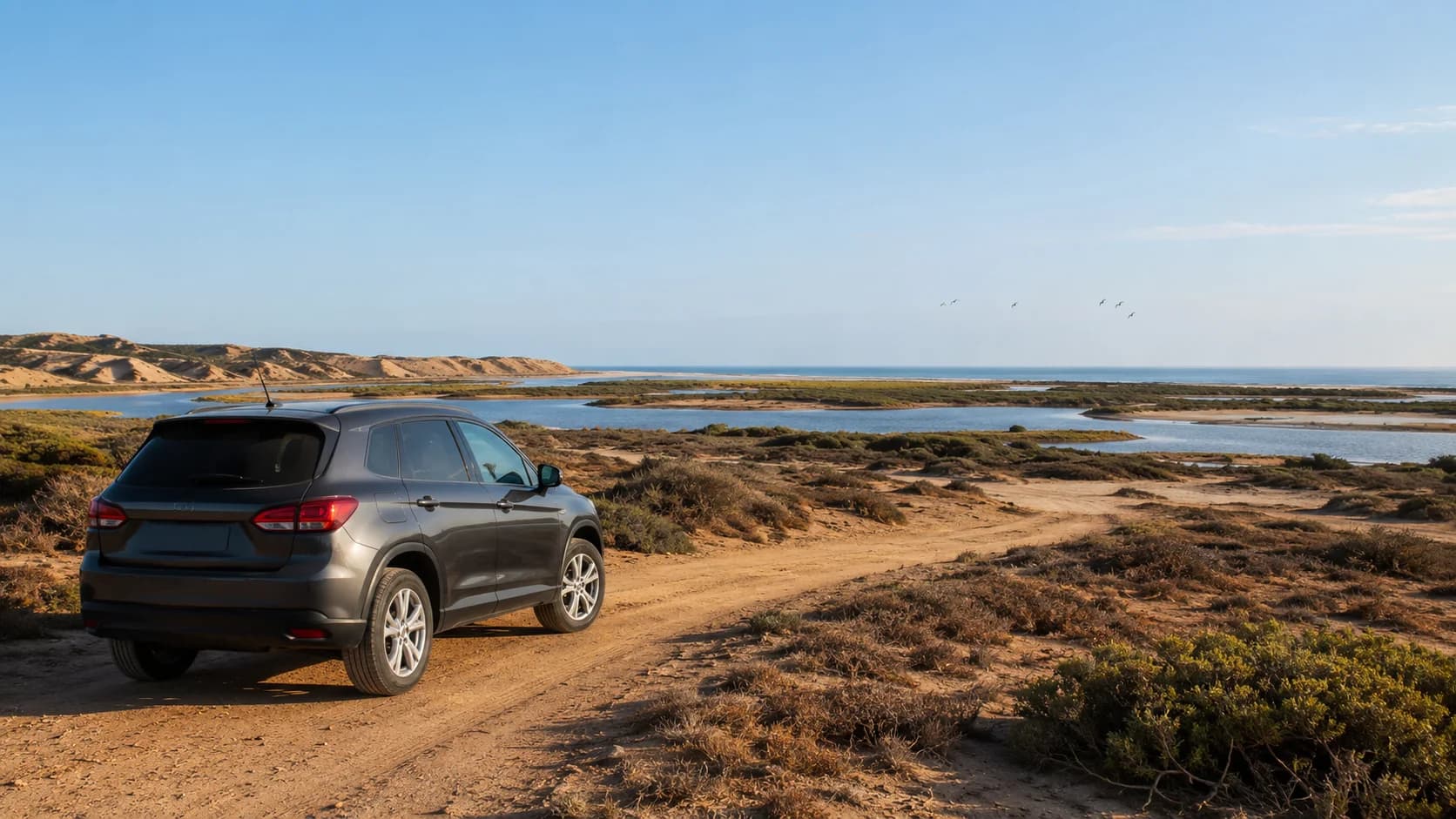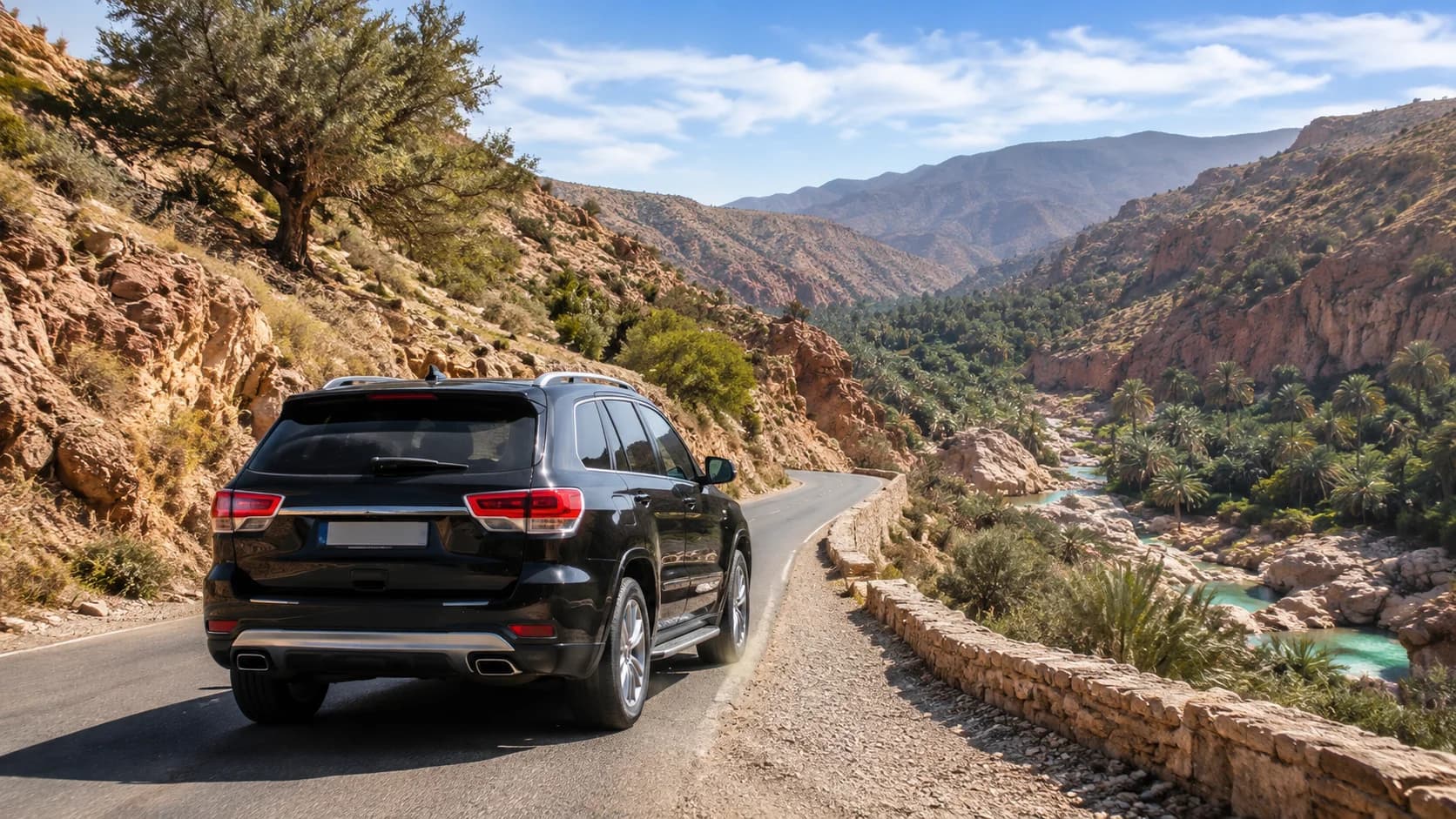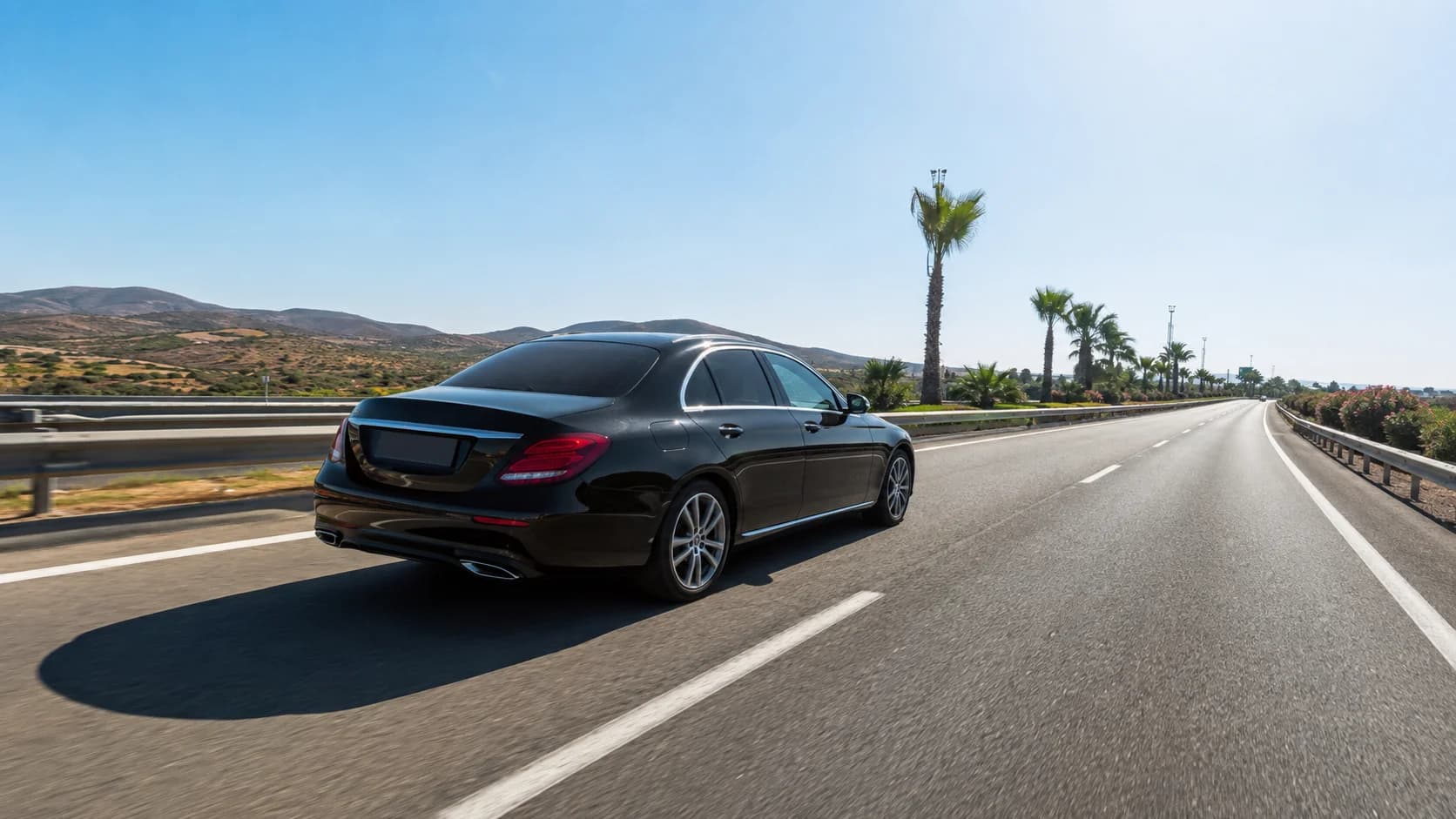









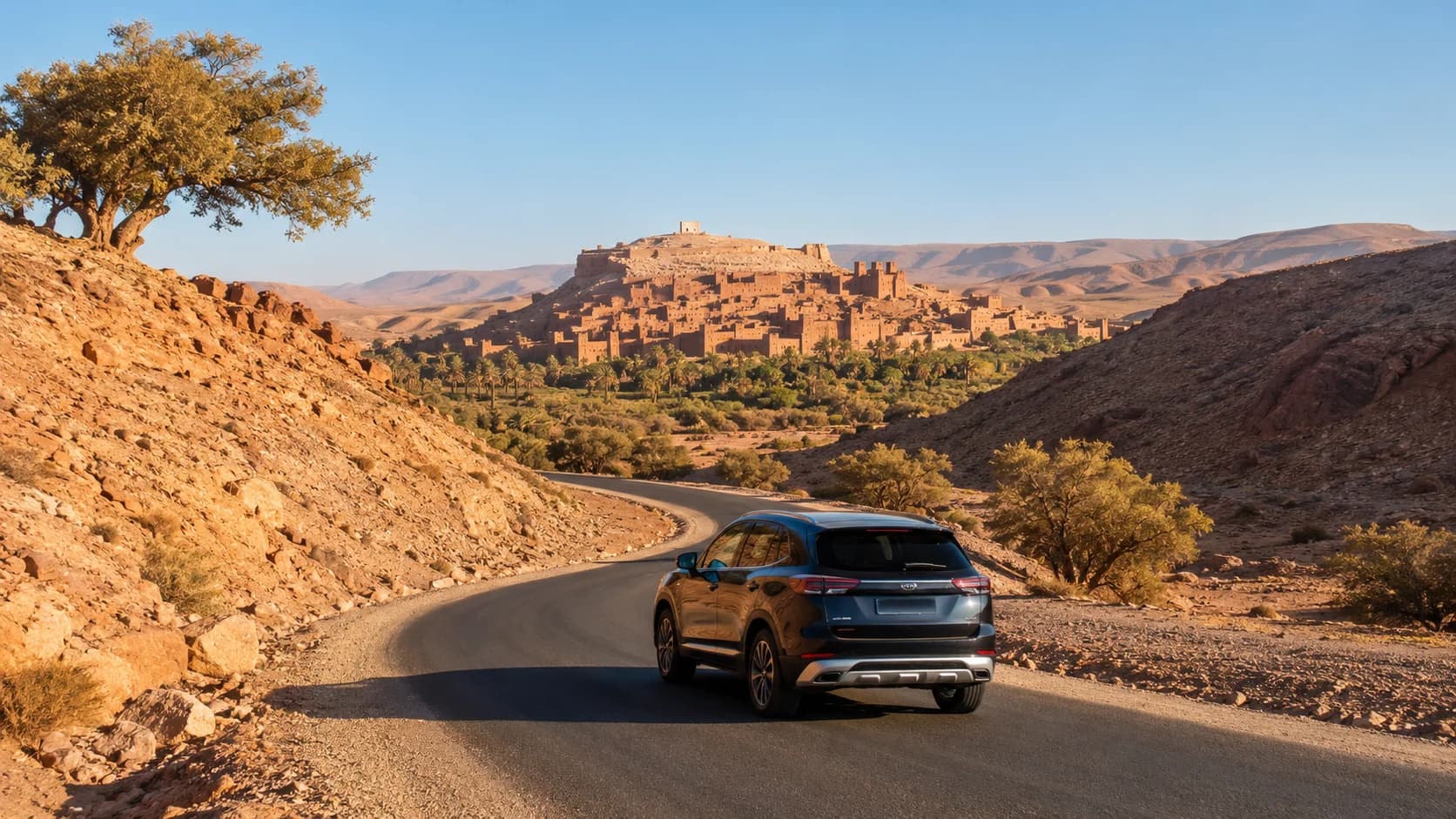
Travelling from Agadir to Aït Benhaddou takes you from Morocco’s Atlantic coast through the Souss Valley, Anti-Atlas landscapes and the dry plateaus surrounding Ouarzazate. It is a long but memorable journey, especially when organised with a private driver who can manage the mountain roads, rest stops and timing.
Aït Benhaddou is not simply another stop in Ouarzazate. It is a historic fortified village, or ksar, constructed largely from earth and located beside the former caravan route linking the Sahara with Marrakech. UNESCO describes it as an important example of southern Moroccan earthen architecture and has listed it as a World Heritage Site since 1987.
The trip can technically be completed as a very long day excursion, but most travellers will enjoy it more as an overnight journey. This guide explains the route, realistic driving time, vehicle choices and the best ways to combine Aït Benhaddou with Ouarzazate.
Table of Contents
- Agadir to Aït Benhaddou
- Distance, route and travel-time factors
- Can it be done as a day trip?
- Best departure time
- Scenic and practical stops
- Combining Aït Benhaddou with Ouarzazate
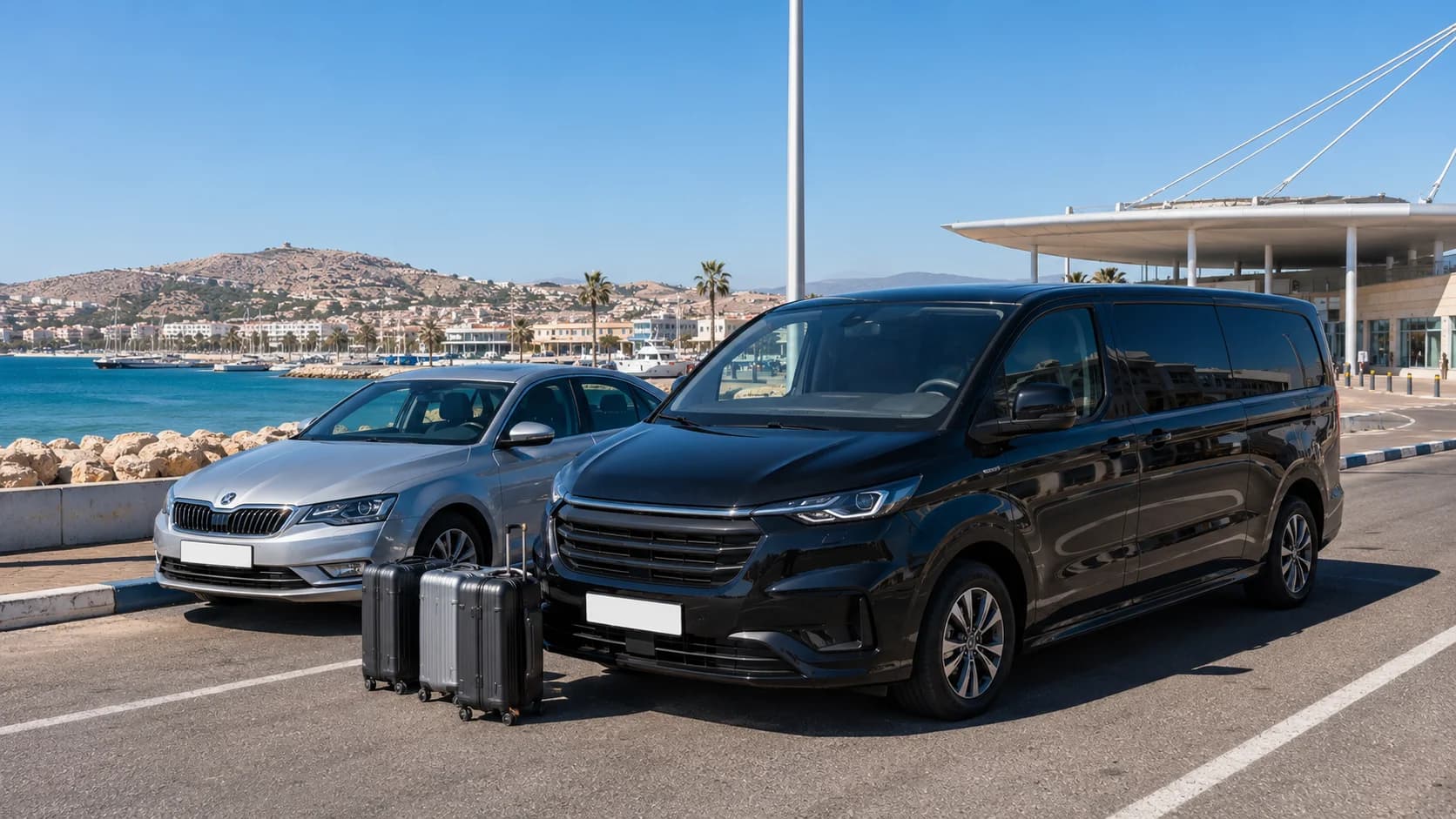
- Sedan vs SUV vs minivan
- Families, luggage and comfort
- One-way, return and overnight options
- Journey-planning checklist
- Frequently asked questions
Agadir to Aït Benhaddou
The road distance from central Agadir to Aït Benhaddou is approximately 325 to 330 kilometres, depending on the pickup location and selected route. Online route estimates place the uninterrupted drive at slightly over five hours, but this does not include meals, fuel stops, traffic, mountain-road delays or scenic breaks.
For a realistic private transfer, allow around six to seven hours each way with reasonable stops.
A same-day return is possible, but it can involve 12 to 14 hours on the road before adding time inside the ksar. For a more comfortable experience, consider spending one night near Aït Benhaddou or in Ouarzazate.
A typical journey includes:
- Hotel, resort or airport pickup in Agadir
- Travel through Taroudant and the Souss Valley
- A break near Taliouine or Taznakht
- Arrival at Aït Benhaddou
- Two to three hours for lunch and exploration
- Optional continuation to Ouarzazate
- Return to Agadir or overnight accommodation
Booking intercity travel from Agadir allows the itinerary to be planned around your preferred departure time, stops and final destination.
Distance, Route and Travel-Time Factors
The most practical route generally takes you east from Agadir through the Souss-Massa region towards Taroudant, Taliouine and Taznakht before turning towards Aït Benhaddou.
Unlike the road from Marrakech, this itinerary does not normally cross the Tizi n’Tichka Pass. However, it still includes long rural sections, changing elevations, bends and areas where overtaking opportunities may be limited.
A typical route
The journey usually follows this general sequence:
Agadir → Taroudant → Taliouine → Taznakht → Aït Benhaddou
The exact road may change according to local conditions, construction, weather and the driver’s assessment on the day.
Why the journey takes longer than the distance suggests
A distance of around 327 kilometres may look manageable on a map, but the complete trip is not comparable to driving the same distance on a motorway. Travel time can be affected by:
- Traffic leaving Agadir
- Slower vehicles on rural roads
- Mountain bends and elevation changes
- Road maintenance
- Town-centre traffic
- Fuel and comfort stops
- Weather and visibility
- Photography breaks
A professional driver should build flexibility into the schedule rather than promising an exact arrival minute.
Can It Be Done as an Agadir to Aït Benhaddou Day Trip?
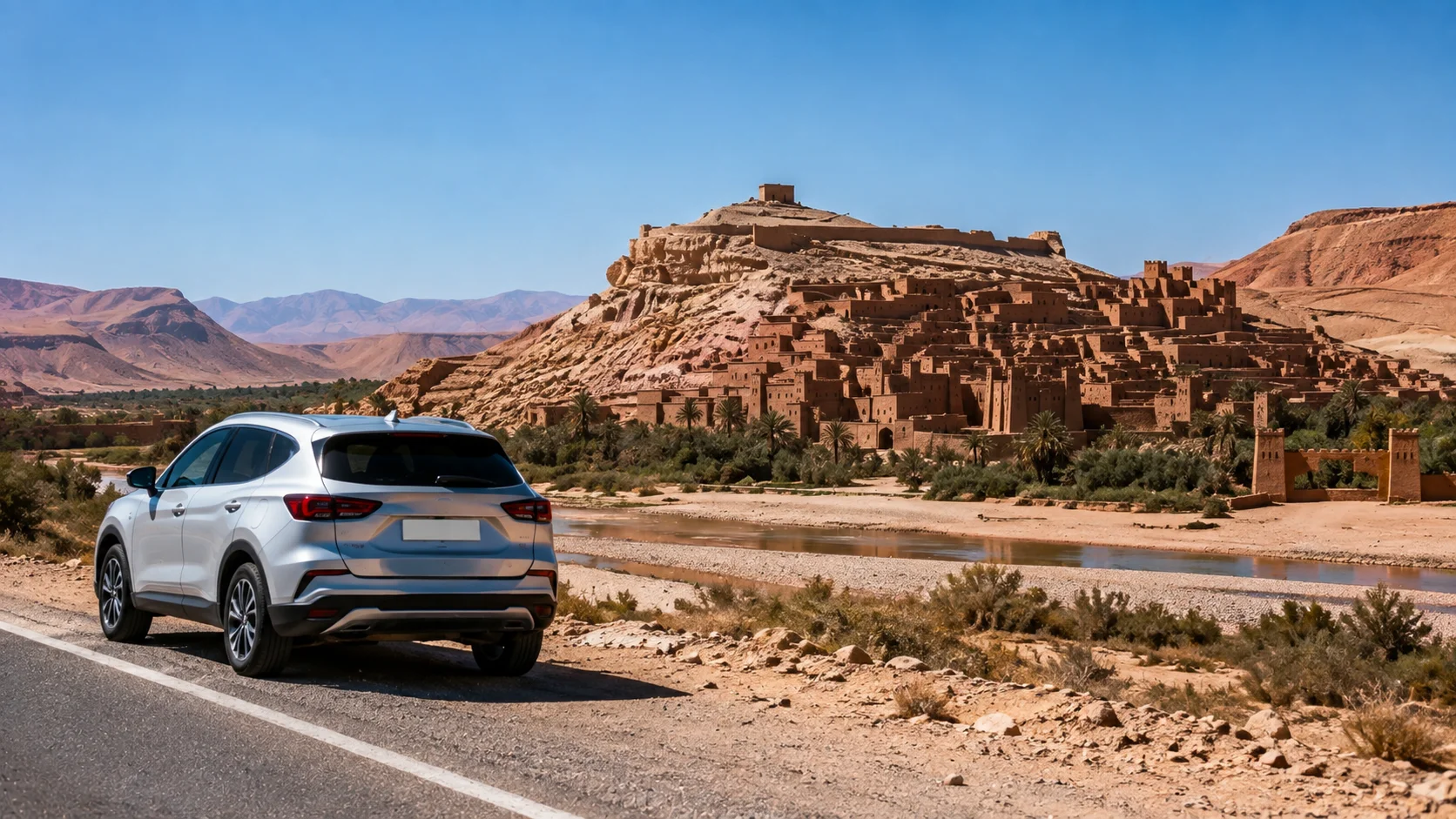
An Agadir to Aït Benhaddou day trip is possible, but it is demanding.
A direct return journey can require approximately ten to twelve hours of driving without meaningful stops. Once breakfast, rest breaks, lunch and sightseeing are added, the full excursion can easily reach 14 to 16 hours.
That makes it better suited to travellers who:
- Are comfortable with an extremely early departure
- Have limited time in Morocco
- Want to focus primarily on Aït Benhaddou
- Do not plan an extensive Ouarzazate visit
- Are comfortable returning to Agadir late in the evening
It is less suitable for young children, travellers who dislike long drives or visitors who want time to explore slowly.
A realistic same-day schedule
A carefully organised day trip might look like this:
| Approximate time | Activity |
|---|---|
| 5:30–6:00 | Pickup in Agadir |
| 8:00 | Breakfast or coffee break |
| 11:30–12:30 | Arrival near Aït Benhaddou |
| 12:30–15:30 | Ksar visit and lunch |
| 15:30–16:00 | Begin return journey |
| 21:30–23:00 | Arrival in Agadir |
These times are only planning estimates. Road and weather conditions can change the schedule.
A private driver makes the excursion easier because passengers can rest during the journey rather than concentrating on navigation, fuel stops and unfamiliar roads.
Best Departure Time
For a return trip, leaving Agadir between 5:30 and 6:00 in the morning is strongly recommended.
An early start offers several advantages:
- More daylight for rural roads
- Cooler morning temperatures
- Less pressure during rest stops
- More time inside the ksar
- Greater flexibility if traffic causes delays
- A better chance of beginning the return before sunset
A departure after 7:00 can make the day feel rushed, especially when combining Aït Benhaddou and Ouarzazate.
For a one-way transfer or overnight itinerary, leaving between 7:00 and 8:30 is normally more comfortable. You can have breakfast in Agadir, make several stops and arrive during the afternoon without needing to rush back.
Scenic and Practical Stops
The journey should not be treated as five uninterrupted hours inside a vehicle. Well-planned breaks make the transfer safer and more enjoyable.
Taroudant
Taroudant is a natural early stop on the route. The city is known for its ochre ramparts and traditional atmosphere.
A short stop can be used for:
- Coffee or breakfast
- Toilets
- Buying water
- Stretching your legs
- A brief view of the city walls
A full medina visit should normally be reserved for an overnight itinerary because it can add considerable time.
Taliouine
Taliouine is associated with Morocco’s saffron-growing region and makes a useful mid-route break.
Depending on timing, travellers can stop for:
- Tea or coffee
- A light meal
- Local product shopping
- A short landscape photo stop
Taznakht
Taznakht is another practical stopping point before continuing towards Aït Benhaddou. It is known for carpet production and serves as a useful location for fuel, food or a rest break.
Viewpoints and roadside photography
The landscapes gradually change from the greener Souss Valley to rocky plateaus and dry mountain scenery. A private driver can stop at suitable viewpoints when it is safe to do so.
Passengers should avoid asking the driver to stop suddenly on bends, narrow shoulders or busy road sections. It is better to mention photography preferences before departure so safe stopping places can be planned.
Visiting Aït Benhaddou
Aït Benhaddou is a ksar, meaning a fortified settlement rather than one individual kasbah. Its connected earthen buildings, defensive towers, alleys and hillside position illustrate architectural traditions found across southern Morocco. UNESCO particularly recognises the site as an example of the region’s traditional earthen habitat.
Most visitors should allow approximately two hours for a relaxed visit, or closer to three hours when including lunch and the walk to the upper viewpoint.
The experience may include:
- Crossing from the modern village towards the ksar
- Walking through narrow earthen alleys
- Viewing traditional towers and houses
- Climbing towards the upper viewpoint
- Taking panoramic photographs
- Visiting local shops or galleries
- Eating lunch in the surrounding village
Comfortable walking shoes are recommended because some paths are uneven and the climb can feel tiring in hot weather.
Combining Aït Benhaddou With Ouarzazate
Aït Benhaddou and Ouarzazate are often mentioned together, but they are separate destinations.
Aït Benhaddou is the historic fortified settlement. Ouarzazate is a modern regional city associated with kasbah architecture, desert travel and Morocco’s film industry.
Combining both places is possible, although it makes a same-day return to Agadir even longer.
Option 1: Aït Benhaddou only
Choose this option when completing the trip in one day.
It provides more time to explore the ksar, have lunch and take breaks without adding another destination.
Option 2: Aït Benhaddou and a short Ouarzazate stop
This version can include:
- Aït Benhaddou
- Lunch
- A short drive through Ouarzazate
- An exterior stop near a major landmark
- Return to Agadir
It offers a quick introduction but not a complete city visit.
Option 3: Overnight in Ouarzazate
This is the most balanced approach.
Day one: Agadir, route stops, Aït Benhaddou and overnight in Ouarzazate.
Day two: Ouarzazate sightseeing followed by the return to Agadir or continuation towards another destination.
The overnight format provides more time for Aït Benhaddou and avoids beginning a long return journey when everyone is already tired.
Sedan vs SUV vs Minivan
The best vehicle depends more on passenger numbers, luggage and comfort expectations than on the destination itself.
Sedan
A private sedan driver in Agadir is suitable for one to three passengers travelling with moderate luggage.
A sedan offers:
- Comfortable seating for couples
- Efficient road travel
- Air conditioning
- A quieter private environment
- Suitable luggage space for a small group
It is generally sufficient for the standard paved route in normal conditions.
SUV
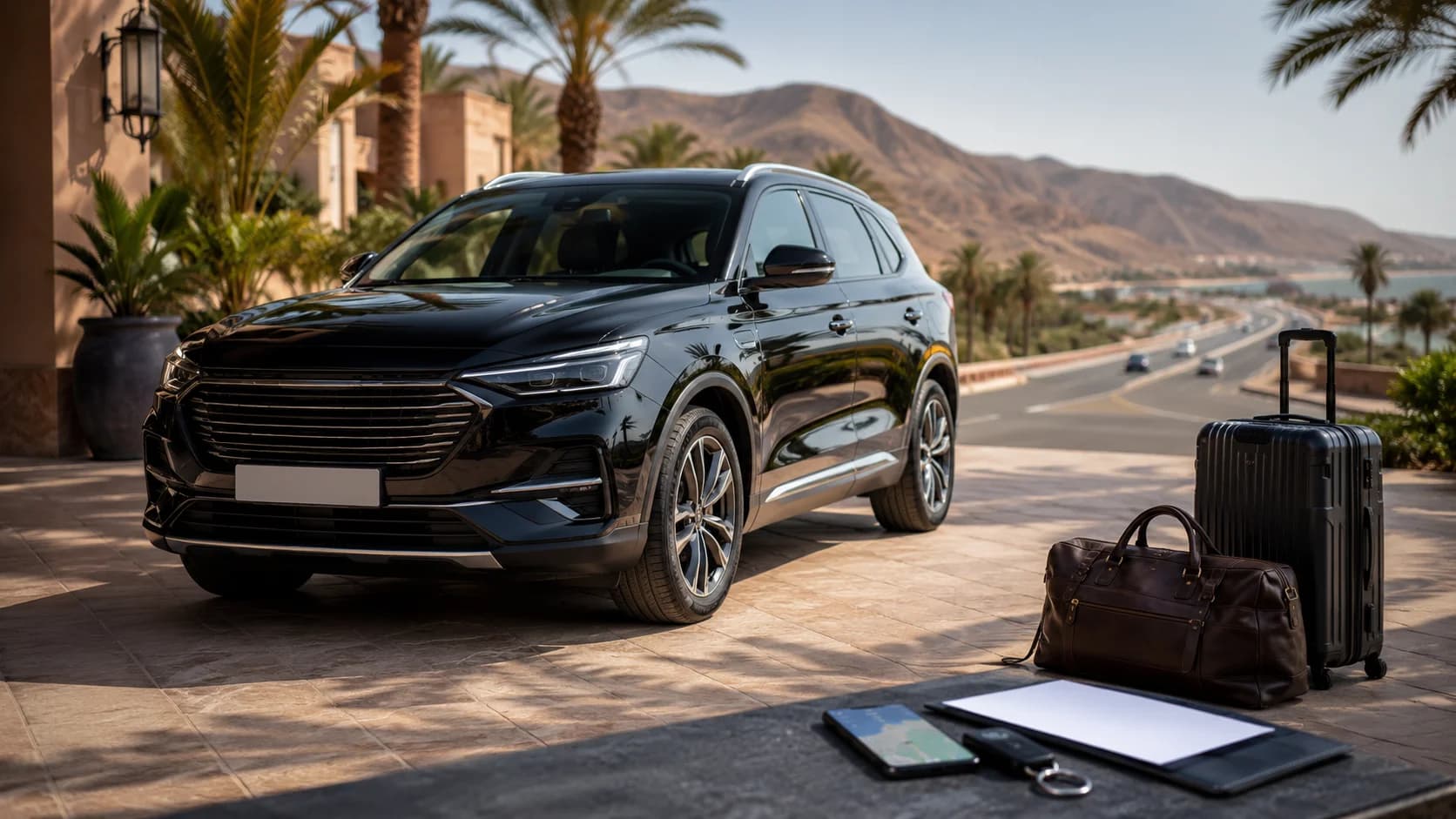
An Agadir SUV transfer provides more cabin space, a higher seating position and increased luggage flexibility.
An SUV may be preferable for:
- Three or four adults
- Travellers carrying several suitcases
- Passengers who prefer extra legroom
- Families carrying a stroller
- Longer overnight itineraries
- Travellers who value a higher road view
An SUV can improve comfort, but it is not automatically required simply because the route passes through mountainous areas.
Minivan
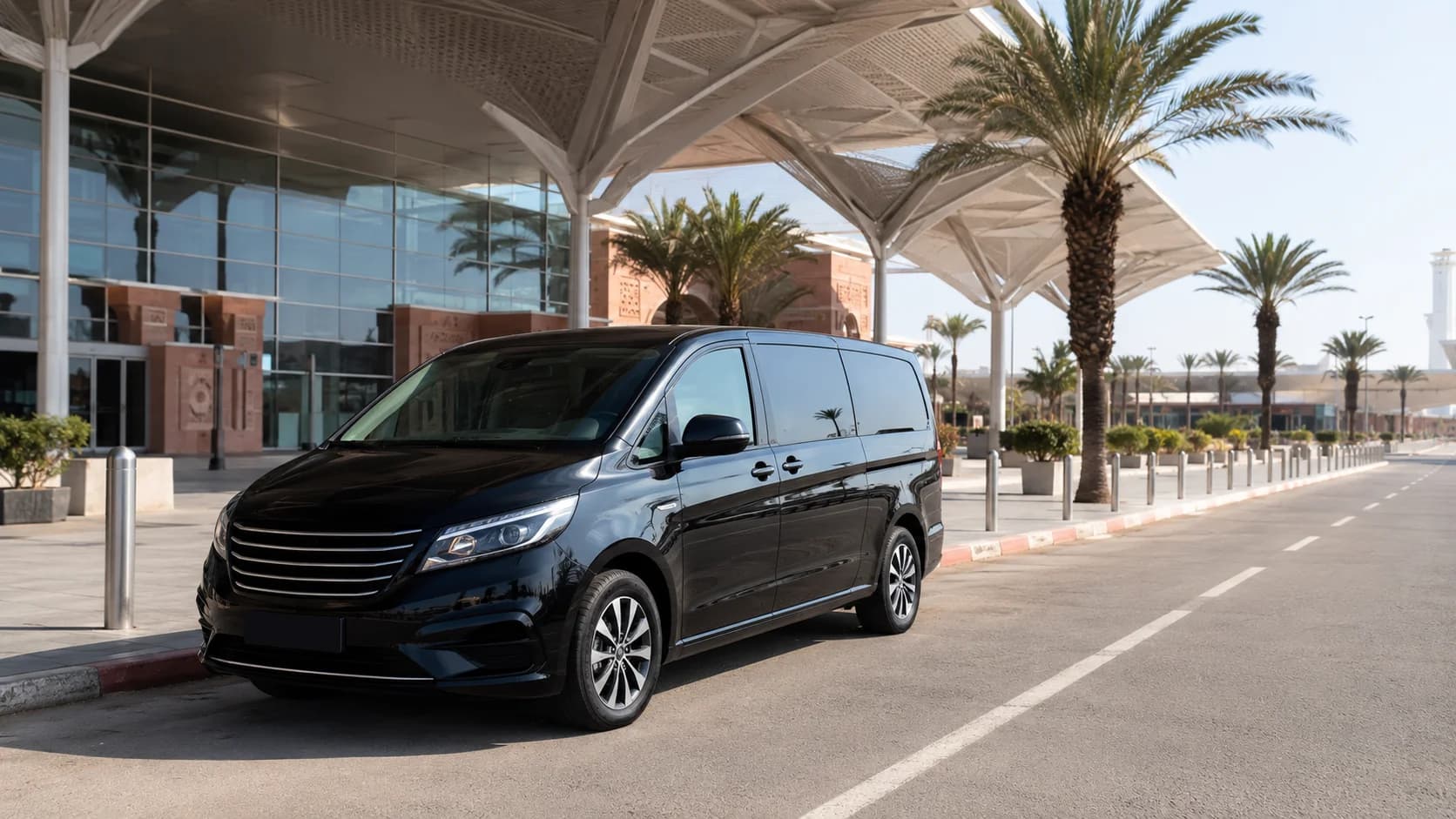
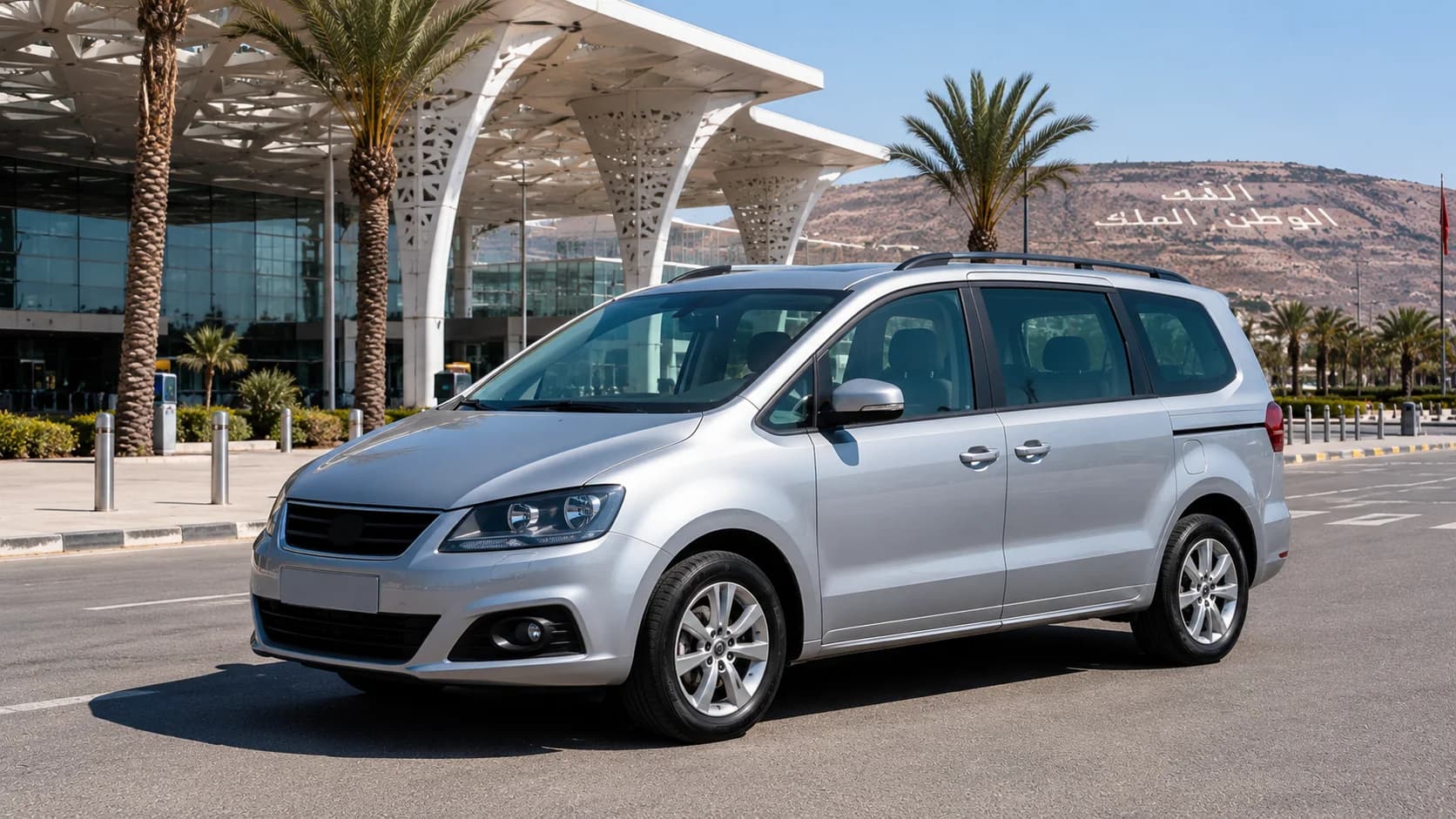
An Agadir minivan transfer is normally the best option for families and groups.
A minivan is useful when carrying:
- Five or more passengers
- Multiple large suitcases
- Child seats
- A stroller
- Photography equipment
- Overnight bags
Extra space is particularly valuable on a journey that can last six or seven hours.
Families, Luggage and Comfort
Families can book a private driver for the journey, but the itinerary should be adjusted around the passengers.
Parents travelling with children should request child seats during booking rather than waiting until pickup. They should also mention stroller dimensions and the number of suitcases so the correct vehicle can be assigned.
For a comfortable journey, carry:
- Drinking water
- Light snacks
- Sun protection
- Comfortable footwear
- A light layer for cooler mornings
- Necessary medication
- Chargers or power banks
- Small cash for rural stops
Passengers who experience motion discomfort should sit where they can see the road and inform the driver before departure. Additional short breaks can be scheduled.
One-Way, Return and Overnight Options
A private journey does not need to end in Agadir on the same day.
One-way transfer
A one-way transfer from Agadir to Aït Benhaddou works well when continuing towards:
- Ouarzazate
- Skoura
- The Dadès Valley
- Agdz
- Zagora
- Merzouga
The driver can drop passengers at accommodation in Aït Benhaddou or Ouarzazate.
Same-day return
This is appropriate for travellers with limited time, provided they accept the long schedule and early departure.
Confirm whether the booking includes:
- Waiting time
- Planned sightseeing time
- Return transport
- Driver meals or accommodation
- Extra hours
- Late-night arrival
Overnight arrangement
An overnight itinerary allows the driver to wait locally or return at a prearranged time the following day, depending on the booking structure.
Confirm the complete schedule before departure, including the hotel address and next-day pickup time.
Agadir to Aït Benhaddou Journey-Planning Checklist
Before confirming the booking, provide the operator with:
- Agadir pickup address
- Number of adults and children
- Amount and size of luggage
- Required child seats
- Preferred departure time
- One-way or return itinerary
- Requested stops
- Time needed at Aït Benhaddou
- Ouarzazate visit request
- Overnight accommodation details
- Final destination
- Special mobility or comfort requirements
Ask for a written itinerary showing what is included. The booking should clarify the vehicle category, waiting arrangement, route, pickup time and whether additional stops are included.
Frequently Asked Questions
How do I travel from Agadir to Aït Benhaddou?
The most direct option is a private vehicle travelling through the Souss Valley towards Taroudant, Taliouine and Taznakht. Public transport generally requires multiple stages, while a private driver provides direct pickup and planned stops.
Can I visit Aït Benhaddou from Agadir in one day?
Yes, but it is a very long day. Expect an early departure, approximately 12 hours of total road time with breaks, several hours at the destination and a late return to Agadir.
How long should I allow for the journey?
Allow approximately six to seven hours in each direction when including reasonable rest and meal stops. An uninterrupted route estimate is slightly above five hours, although real travel conditions can extend this.
Can I combine Aït Benhaddou and Ouarzazate?
Yes. A short Ouarzazate stop can be added to a long day trip, but an overnight itinerary is better for exploring both destinations without rushing.
Which vehicle is best for the route?
A sedan works well for a couple or small group with limited luggage. An SUV offers additional space, while a minivan is preferable for larger groups, families and travellers with several bags.
Is an SUV necessary for Aït Benhaddou?
No. An SUV is not normally necessary for the standard road journey in normal conditions. It is primarily a comfort and luggage choice rather than a strict route requirement.
Can families book a private driver for this trip?
Yes. Families should provide the children’s ages, request suitable child seats and choose a vehicle with enough room for passengers, luggage and any stroller.
Can the driver wait while we visit the ksar?
Waiting can normally be included as part of a return itinerary, but the permitted sightseeing time should be agreed before the trip.
Is an overnight stay better than a day trip?
For most travellers, yes. Staying overnight makes the journey less tiring and gives you more time to explore Aït Benhaddou and Ouarzazate.
Can I book a one-way transfer from Agadir?
Yes. A one-way booking can end at accommodation in Aït Benhaddou, Ouarzazate or another agreed destination.
Plan Your Private Journey From Agadir
The route from Agadir to Aït Benhaddou is more than a simple point-to-point transfer. It is a full journey through changing Moroccan landscapes, historic towns and the gateway to the country’s desert regions.
Turn the long route into a carefully planned experience by booking a private driver with suitable stops, enough luggage space and flexible one-way, return or overnight arrangements. Choose an intercity transfer from Agadir, then select a sedan, SUV or minivan based on your group and itinerary.